Tuesday, 16 March 2010

The two main shoots


My two main shoots took place on consecutive weekends one in Brighton, and the other back at home in Dorset. Both of the weekends yielded some good pictures which would provide the base for my final 6-8.
With the theme of my work now changed, albeit not dramatically, to that of markets in wanted to best capture the atmosphere of the North laine and London road areas of the town. I tried however to steer clear of a cliched view of the Laines, offering more of a fly on the wall/ documentary style and content, than a glib adoration the areas alternative way of life.
I think this approach did produce some good images, with minimal manipulation needed for them in the edit, this is mainly down to good lighting on the day, which meant pictures could be taken almost anywhere efficiently.


the second main shoot involved traveling to Wimborne in Dorset famous for its market which spreads both in doors and out. the shoot here was combined with sound recording; with the market being perpetually busy allowing for a decent amount of ambient sound. Again here i was aiming for a more realist approach to the work, composing the pictures within the frame, looking for little editing later. Even though it was a bright morning the inside shots of the market left a distinctly grainy feel, akin to that of Cartier-Bresson or Sander (see below). also i felt i had captured some images here which were simply 'everyday' but possessed a feeling of isolation; people browsing alone or the chairs and tables shown here empty and desolate.
both of the shoots went without any real problems and allowed for quick work in the edit.

Monday, 15 February 2010

Tests; lighting and portraiture.

I have been experimenting with aperture and shutter speed in a quite dark environment, attempting to create contrasts between light and shadow, especially with regards to the two portraits shown here; when I shot for the project I am to manipulate this more through the use of black and white.


Influences


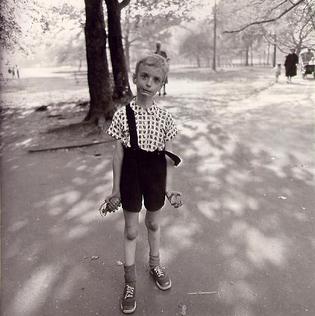
Child with a hand grenade by Dianne Arbus.

Having so far looked at some very intriguing photographers on the course, I would like to appropriate and apply their style to some of my own work, as well as influences of realism from certain filmmakers and cinematographers.
For me the two most interesting photographers I have encountered so far have been Dianne Arbus and Henri Cartier-Bresson. Though both unique I believe them to both posses an unflinching quality in their work to capture the real and the alternative in equal measure.
Another primary influence for me (coming from a film studies background) is the work of directors in the Italian neo-realist movement, the British new wave and the French Nouvelle Vague. Most of the works from these periods in cinema have an air of documentary realism that adds an urgency and candid energy to them.


Still from Roma, città aperta(1945) shot using fast stock and natural lighting, to give more of a sense of newsreel footage than the turgid gloss of a Hollywood picture.


Behind the Gare St. Lazare by Cartier-Bresson, who saw the camrea as a new way of painting captureing things exactly as they were: "I suddenly understood that a photograph could fix eternity in an instant."

Introduction and Breif


Brighton seafront seen from North Rd flat


This blog will follow the trials and tribulations of my first attempt at serious photography, Having played around with a canon A1 in my earlier days, the concept is not completely alien to me, but digital photography is to some extent; having never owned or properly operated a digital SLR.
My original plan for this project (entitled Place,was to create a portfolio of images based in and around a typical trades and labour club on Lewes road in Brighton, this having fell through, I want to now concentrate on the idea of a market(s), places of trade in Brighton. A theme interesting in both aesthetics of place and in portraiture of their in habitants. As emphasised before I wish to shoot this is a realist mode of documentary photography, in the tradition of Henri Cartier-Bresson or the cinematography style of neo-realist filmmakers such as Roberto Rossellini.